Address
304 North Cardinal
St. Dorchester Center, MA 02124
Work Hours
Monday to Friday: 7AM - 7PM
Weekend: 10AM - 5PM
Address
304 North Cardinal
St. Dorchester Center, MA 02124
Work Hours
Monday to Friday: 7AM - 7PM
Weekend: 10AM - 5PM
Explore a curated visual language of abstract artwork, earthy tones, expressive portraits, and tactile compositions designed to bring depth and character to contemporary interiors.
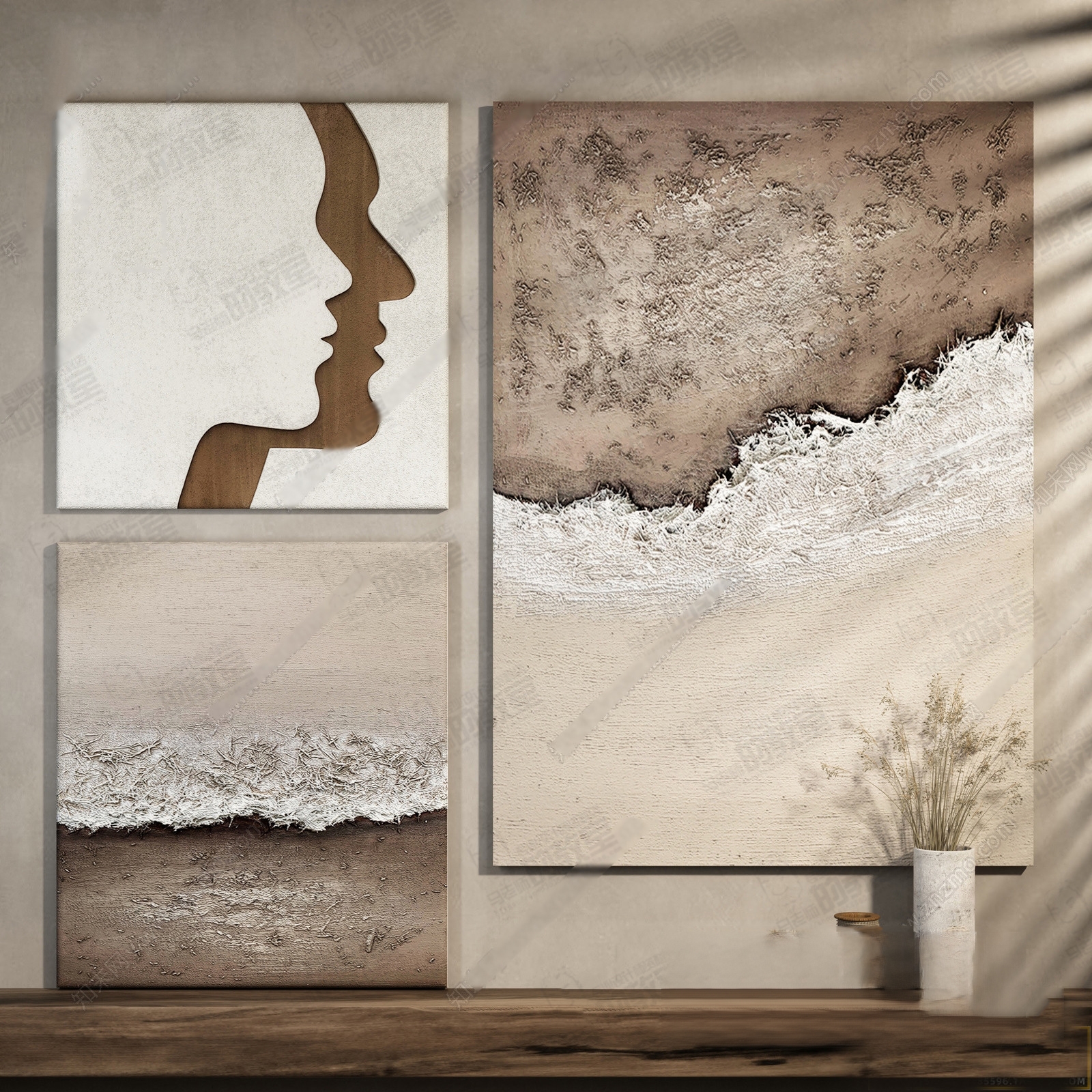
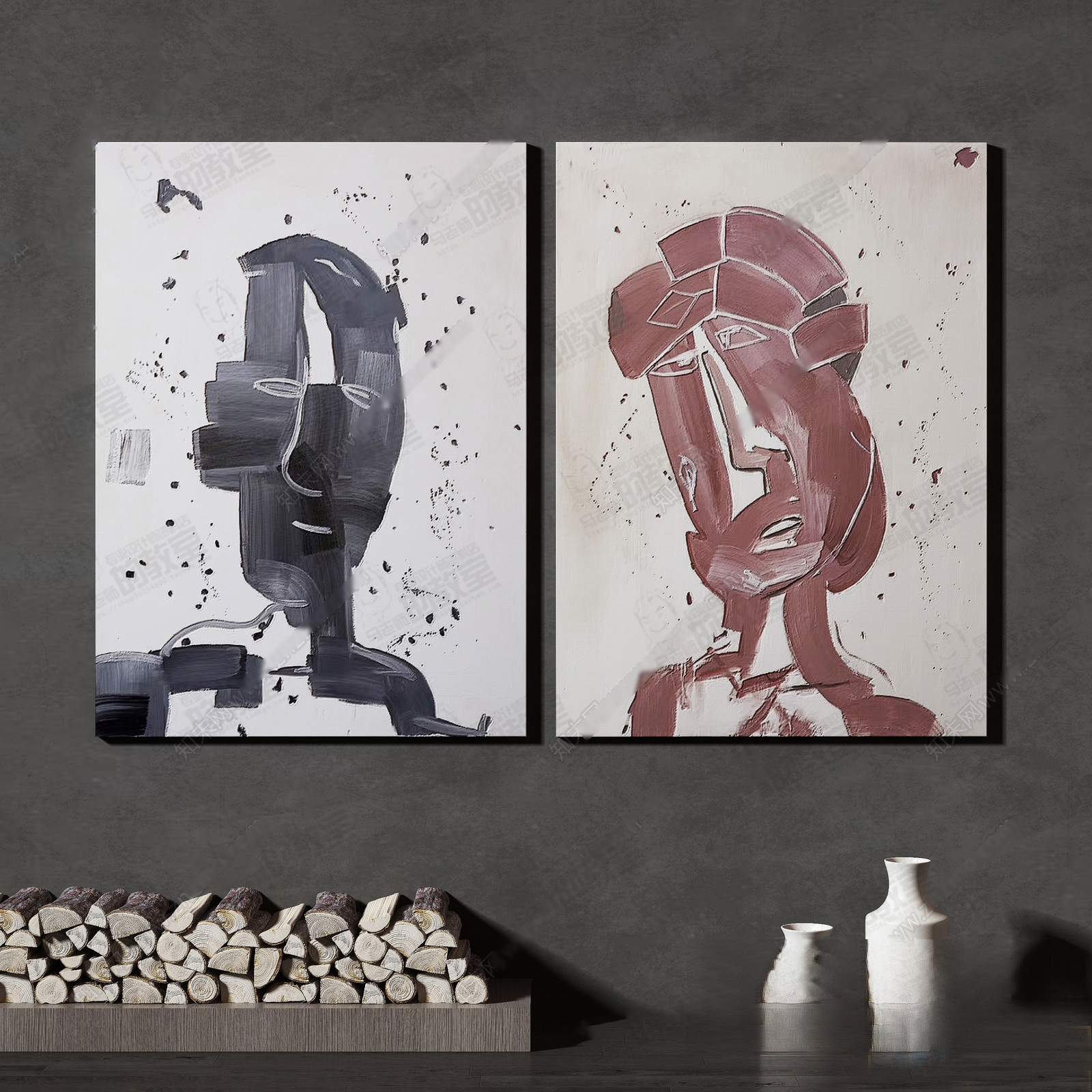
Abstract artwork can shape the atmosphere of a room without relying on literal imagery. Across these five interiors, paintings become a central design element, combining organic forms, expressive faces, layered textures, and earthy color palettes with carefully styled furniture and accessories.
The artwork shown throughout the collection is grounded in warm neutrals, brown, cream, terracotta, charcoal, and muted rose. These tones work naturally with textured walls, timber surfaces, woven lighting, ceramic vessels, and dark flooring. The result is a calm but visually rich interior scheme that feels considered rather than overly decorated.
For designers developing a similar look, an abstract canvas can serve as the starting point for the room’s palette. Pull a secondary color from the artwork into a vase, cushion, bench, or decorative object, while allowing the surrounding finishes to remain restrained.
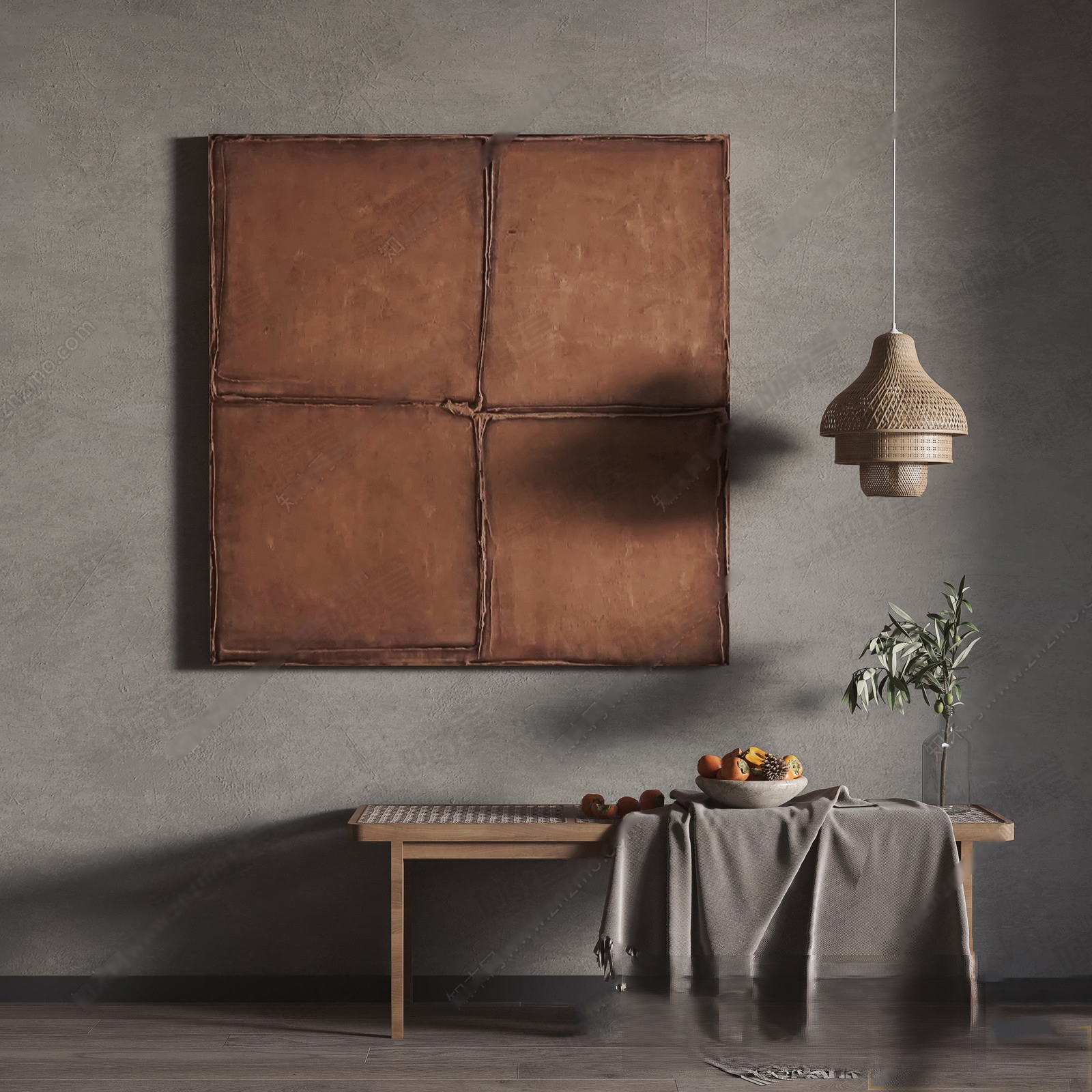
Several compositions emphasize tactile surfaces: rough, plaster-like fields, irregular edges, raised-looking marks, and broad areas of tonal variation. This quality adds depth even when the artwork uses a simple composition. It is especially effective against plain gray or off-white walls, where the surface detail can be appreciated without competing patterns.
Textured abstract pieces are well suited to living rooms, entryways, dining areas, and quiet reading corners. Hang one large work above a console or bench when the room needs a strong focal point, or arrange complementary pieces as a balanced pair when symmetry is part of the interior concept.
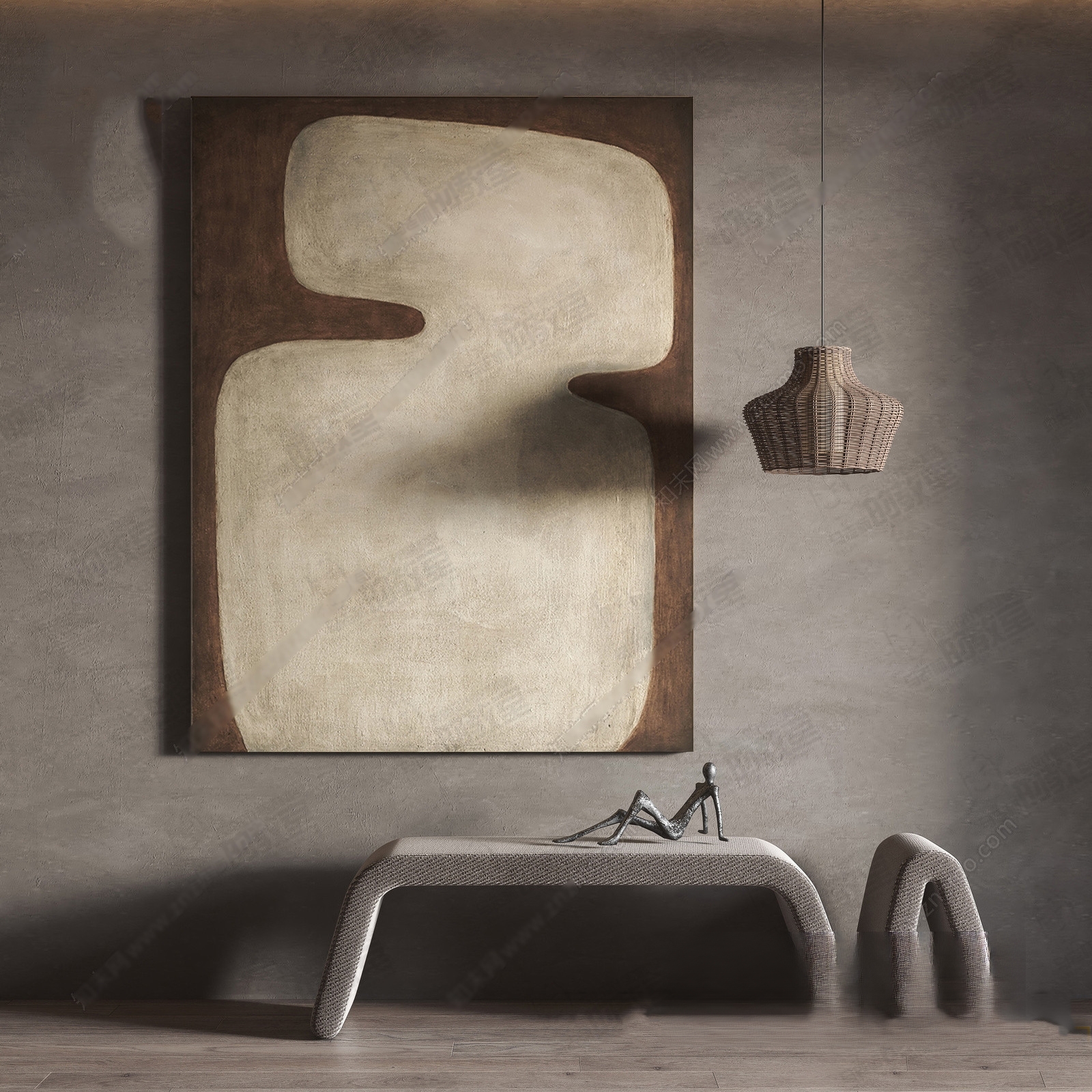
The images present more than one direction within contemporary abstract art. Some works use flowing silhouettes and soft, natural transitions, creating an organic minimalist mood. Others feature graphic portrait studies in black, gray, and muted red, introducing a more expressive and artistic character.
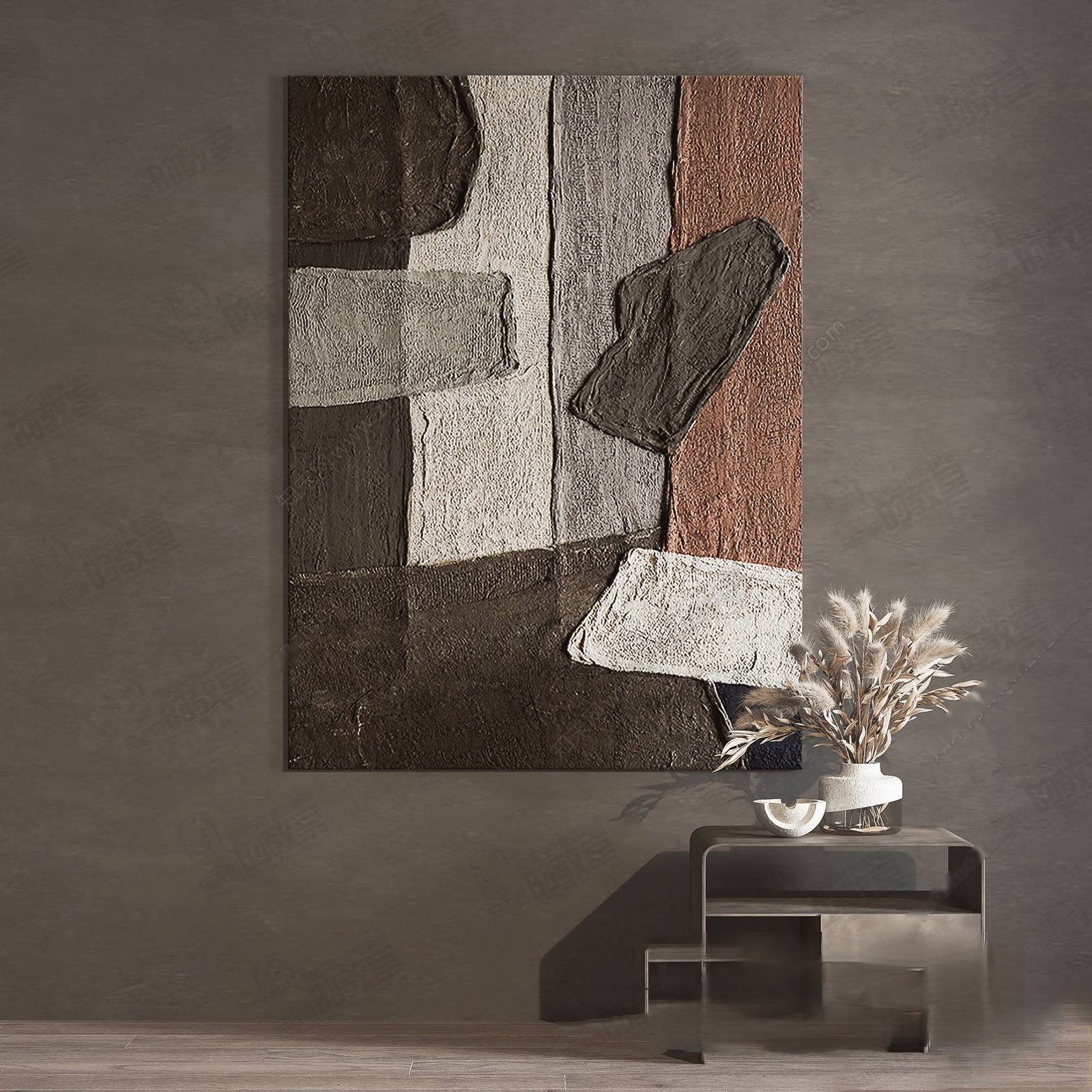
This contrast makes it possible to adapt the same overall approach to different spaces. Organic compositions can soften a minimalist room, while portrait-inspired works can give a darker setting more personality. In both cases, the artwork remains the visual anchor and the furniture supports rather than overwhelms it.
The room settings demonstrate the value of keeping supporting elements simple. A wooden console, a sculptural bench, a woven pendant, ceramic vessels, dried branches, or a small decorative object can reinforce the artwork’s mood without creating visual clutter. Directional daylight and soft shadow also reveal the depth of both the wall finish and the painting.
When placing artwork, consider the relationship between the canvas and nearby furniture. A wide composition works well above a console or low bench, while a vertical piece can fill the wall beside an entry table or narrow architectural zone. Leave enough surrounding space for the artwork to read as an intentional feature.
For architects, interior designers, and 3D artists, the visual direction shown here can be developed into presentation scenes, mood boards, and material studies. The 25 Free 3D Artwork Models collection offers a practical starting point for exploring artwork placement and atmosphere in digital interiors.
Whether the goal is a warm neutral home, a dramatic charcoal setting, or a gallery-inspired room, abstract artwork provides an adaptable way to connect color, texture, lighting, and furniture into one coherent design story.